
Most visitors arriving in India for a tiger come with two or three names already in mind, and a fixed set of dates they cannot move. The trouble with the famous reserves is exactly that combination: the dates are rigid and the permits are not available. People fly a very long way and end up watching a sambar.
Dudhwa Tiger Reserve is the one that solves the scheduling problem without asking you to give up the wildlife. This is what a foreign visitor needs to know before planning one.
Why Dudhwa, when nobody abroad has heard of it
That is precisely the point, and it is worth being direct about it. Dudhwa is not on the standard tour-operator circuit. There is no queue of vehicles at a sighting, no jostling for position, no sense of being processed.
The reserve sits in the Terai — the belt of tall grassland, sal forest and swamp that runs along the foot of the Himalaya and across into Nepal. It is a different landscape from the dry deciduous forests most tiger itineraries visit, and it carries a different set of animals. For a visitor who has already seen a tiger elsewhere in India, or who wants something beyond the obvious, this is the draw.
Permits, passports and paperwork
There is no special permission for foreign visitors beyond the ordinary forest department safari permit, and we raise that for you. What you need to do is simple:
- Send passport details when you book. Name and passport number go onto the permit. The details must match the document, so send them exactly as printed.
- Carry the passport on the drive. Not a photocopy, not a photo on your phone — the document itself.
- Be certain of your dates. Permits are issued against a name, a date and a shift, and they do not move once raised. This is true at every Indian tiger reserve.
Forest rates for foreign visitors differ from Indian rates — that is standard across India and Dudhwa is no exception. We set the figures out in full in your quote before anything is confirmed, so there is nothing to discover at the gate.
The useful part is the timing. At the better-known reserves, permits open on a fixed advance window and the good zones are taken almost as soon as they are released. Dudhwa generally takes bookings far closer to the date. If you are mid-itinerary somewhere else in India and decide to add a few days, that is usually still possible here.
One jeep, one fare
This matters more than it sounds, particularly for families and small groups.
We quote a Dudhwa safari as one jeep, not per seat. Two of you or a full vehicle, the drive costs the same. There is no arithmetic that gets worse as your group gets bigger.
Visitors used to per-person pricing elsewhere tend to read this twice. Worth knowing when you are planning for a family, or for a mixed group where some of you live in India and some are visiting.
What you will actually see
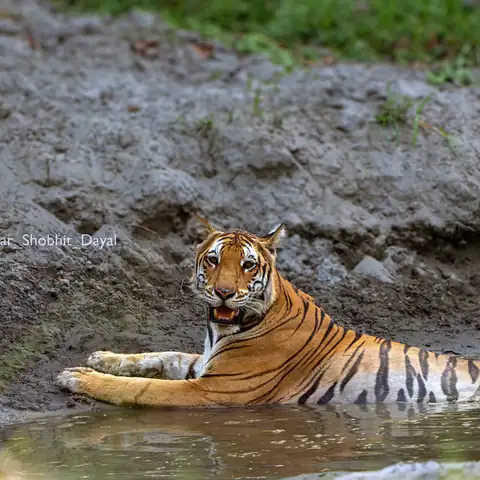
Tigers
Kishanpur Wildlife Sanctuary is the zone with the strongest sighting record in the reserve. It sits a little higher than the surrounding country, which means better visibility, and the area around Jhadi Tal, Beldanda and the Ring Road is where most sightings happen. There are no guarantees anywhere in the wild, and anyone who offers you one is selling something.
Rhinos
The Rhino Area inside Dudhwa Zone 1 holds greater one-horned rhinos, descended from animals brought here from Assam and Nepal in the mid-1980s. Morning slots in the Rhino Area run by elephant, afternoons by vehicle, and places are limited, so this is one to tell us about in advance.
Swamp deer
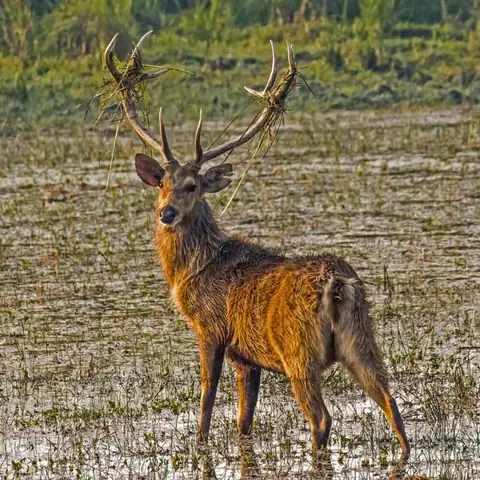
Dudhwa holds roughly half the world's population of barasingha. Several hundred of them moving across open grassland in the first light is the image most visitors take home, and it is one of the few genuinely unusual wildlife sights left in northern India.
Birds
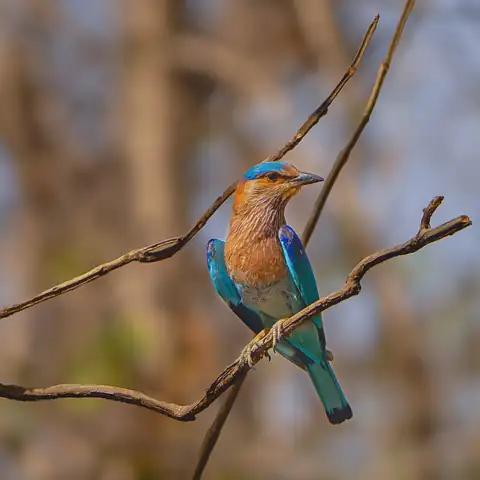
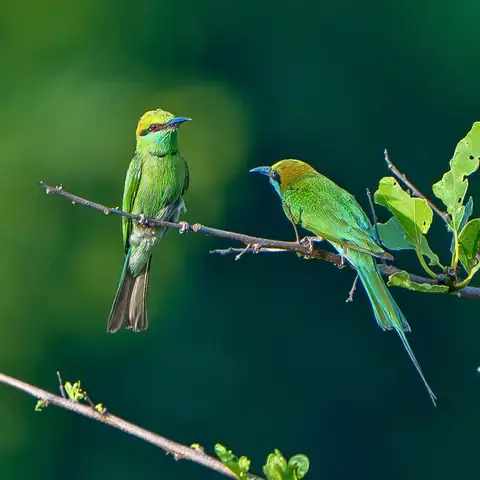
More than four hundred and fifty species have been recorded across the reserve. From November the wetlands fill with winter migrants. Bird walks here need no safari permit, so a birder in the group is never stuck waiting for a slot.
Getting there
| Route | What it involves |
|---|---|
| Via Lucknow | Domestic flight into Lucknow, then roughly four hours by road. The most common route, and the one we recommend. |
| Via Bareilly | Closer by road, with direct flights from Delhi, Mumbai and Bengaluru. A good option if the timings suit. |
| By road from Delhi | A long but straightforward drive. Many visitors break it with a night in Lucknow. |
| With Nepal | The reserve runs along the Indo-Nepal border. If Nepal is already on your itinerary, Dudhwa fits the route rather than detouring from it. |
We arrange a car for pickup and drop from Lucknow or Bareilly airport on request. Say so when you send your dates.
Staying at the gate
Our resort is a two to three minute drive from the Kishanpur Zone gate. In winter, when the morning drive begins before sunrise, that is the difference between leaving your room at six and leaving it an hour earlier after a long drive in the dark.
A few practical things foreign visitors usually want to know:
- Food. Vegetarian, vegan, Jain without onion or garlic, low-spice, allergen-free — all prepared to order. Tell us when you book and the kitchen plans around it.
- Power and hot water. Geysers and power backup. The Terai gets genuinely cold in December and January.
- Mobile signal. Patchy. This is a working forest edge, not a city. Most visitors come to appreciate it.
- Walking. Guided nature walks only. The area has tigers, leopards and crocodiles, and we do not let guests wander alone.
- Between drives. Bird-watching sessions, a bonfire in the evening, and indoor and outdoor games for anyone travelling with children.
When to come
The reserve opens for the season in November and usually closes in mid-June for the monsoon, with the forest department setting the exact dates each year.
Within that window, the choice is a simple one. November to February gives cool, comfortable days and the full weight of the winter bird migration; mornings are cold and foggy, and the grass is still tall. March to mid-June is hot, sometimes very hot by late May, but the grass has thinned and animals gather at water, which is when tiger sightings are at their best.
Two fixed closures to plan around: Kishanpur Zone is closed on Wednesdays, and Dudhwa Zone 1 on Tuesdays. We build your itinerary around them so no morning is lost.
